Some movies weave themselves into public memory through spectacle, others through reflection. Once Upon a Time in Hollywood does both — but in a way that manages to be tender, irreverent, and deeply thought-provoking all at once. At first glance, it’s a stylish period piece soaked in nostalgia. But spend time with it, and it becomes a meditation on what could have been — not just for Sharon Tate, but for America.
It takes place in 1969, a crossroads for the country and particularly for Los Angeles. That year would come to symbolize the death of the 1960s dream, a cultural flame snuffed out by the Manson murders and what they represented: the moment when peace, love, and psychedelic rebellion gave way to something darker. That’s the story we usually tell. But Tarantino wasn’t interested in repeating it. Instead, he rewrote it.
In his version, the violence still comes — graphic and absurd, more Looney Tunes than documentary — but the outcome is different. Sharon Tate doesn’t die. The terrifying footnote of the Manson Family is corrected into a farce. And audiences, instead of recoiling in horror, laugh out loud at the climax. Not because violence is funny, but because in this alternate ending, justice — ironically messy, maybe, but justice nonetheless — feels like a release. It’s fantasy as resistance.
This storytelling trick is part of a tradition of revisionist cinema that Tarantino has worked in before, most memorably with Inglourious Basterds. But what feels different here is the emotional intimacy — the hope that if we can rewrite one small corner of history, maybe we can restore some innocence too.
The film is intimate on another level as well: it’s a love letter. To Hollywood, yes — but also to Sharon Tate, portrayed with surprising gentleness and grace. Tarantino, who is often accused of exploiting violence and women for spectacle, took a different approach here. He sought out the blessing of Tate’s family. He focused on small, quiet moments of her life — going to the movies, dancing with friends. He let her be a person, not a symbol. And that generosity echoes throughout the film.
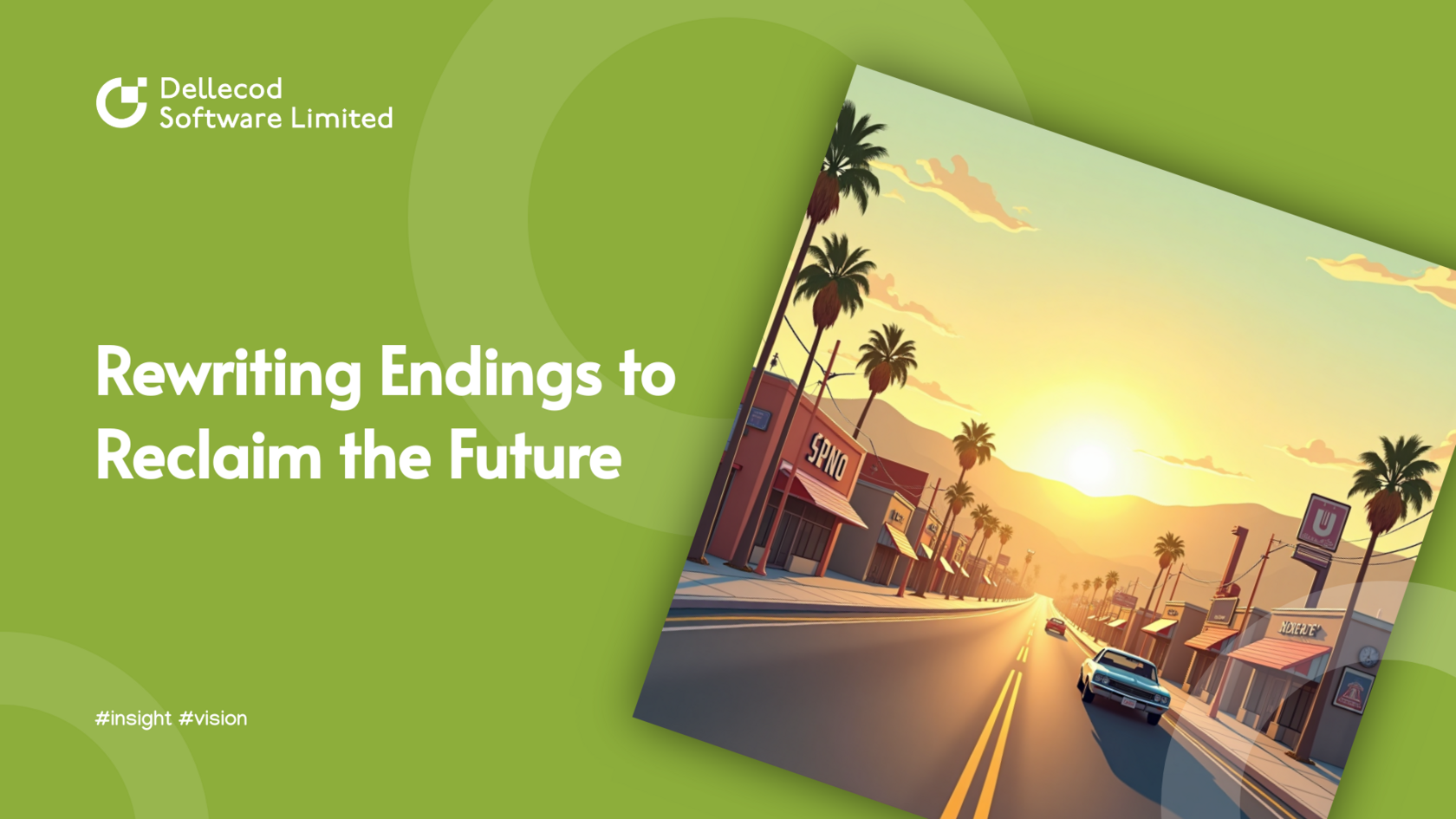
Los Angeles, where the movie is set and which we at Dellecod know as both a real and imagined place, becomes its own character. LA has always stood in for something larger — the myth of reinvention, of dreaming big on unstable ground. It was marketed in the 1800s as paradise just waiting for you to show up and build a future. Tarantino taps into that cultural DNA and shows how even a fantasy landscape can contain real pain, longing, decay — and hope.
There’s something almost meta about watching Rick Dalton, Leonardo DiCaprio’s washed-up TV cowboy, try to stay relevant against a backdrop of revolution. Or Cliff Booth, Brad Pitt’s aging stunt double, roaming the city like a human artifact of another era. Their nostalgia, ego, and uncertain relevance mirror the culture around them. You could read this as commentary on Hollywood’s treatment of aging men, or on America’s shifting ideals of masculinity. You could also read it as portraiture — a dusty snapshot of the old West finally giving way to the new.
It’s easy to over-intellectualize movies like this, but the truth is often simpler and more honest. Sometimes people laugh at the violent, absurd scenes not because they’re numb or cruel — but because, after everything, it feels good to be offered what history never provided: a happy ending.
We’ve been thinking a lot about endings lately. Cultural turning points tend to echo each other, and the parallels between the late 1960s and the 2010s–2020s are hard to ignore. Once Upon a Time in Hollywood was released in 2019, on the edge of another historic moment when trust in institutions, art, and each other was starting to feel brittle. In both eras, the idealism of youth collided with political backlash and disillusionment. And in both, a desire emerged not for denial, but for revision — a look back that still makes room for possibility.
Tarantino handles that revision with such specificity — a flamethrower callback here, an LSD-laced cigarette there — that the surreal becomes strangely believable. One line gets crossed, and the dominoes fall differently. The story retains its texture but shifts in meaning. It's not just what happened — it's what we wish had happened. And in that lies its power.
Some stories want to teach you something. Others want to undo something. This one tries to do a little of both — which is maybe why it lingers the way it does.
It takes place in 1969, a crossroads for the country and particularly for Los Angeles. That year would come to symbolize the death of the 1960s dream, a cultural flame snuffed out by the Manson murders and what they represented: the moment when peace, love, and psychedelic rebellion gave way to something darker. That’s the story we usually tell. But Tarantino wasn’t interested in repeating it. Instead, he rewrote it.
In his version, the violence still comes — graphic and absurd, more Looney Tunes than documentary — but the outcome is different. Sharon Tate doesn’t die. The terrifying footnote of the Manson Family is corrected into a farce. And audiences, instead of recoiling in horror, laugh out loud at the climax. Not because violence is funny, but because in this alternate ending, justice — ironically messy, maybe, but justice nonetheless — feels like a release. It’s fantasy as resistance.
This storytelling trick is part of a tradition of revisionist cinema that Tarantino has worked in before, most memorably with Inglourious Basterds. But what feels different here is the emotional intimacy — the hope that if we can rewrite one small corner of history, maybe we can restore some innocence too.
The film is intimate on another level as well: it’s a love letter. To Hollywood, yes — but also to Sharon Tate, portrayed with surprising gentleness and grace. Tarantino, who is often accused of exploiting violence and women for spectacle, took a different approach here. He sought out the blessing of Tate’s family. He focused on small, quiet moments of her life — going to the movies, dancing with friends. He let her be a person, not a symbol. And that generosity echoes throughout the film.
Los Angeles, where the movie is set and which we at Dellecod know as both a real and imagined place, becomes its own character. LA has always stood in for something larger — the myth of reinvention, of dreaming big on unstable ground. It was marketed in the 1800s as paradise just waiting for you to show up and build a future. Tarantino taps into that cultural DNA and shows how even a fantasy landscape can contain real pain, longing, decay — and hope.
There’s something almost meta about watching Rick Dalton, Leonardo DiCaprio’s washed-up TV cowboy, try to stay relevant against a backdrop of revolution. Or Cliff Booth, Brad Pitt’s aging stunt double, roaming the city like a human artifact of another era. Their nostalgia, ego, and uncertain relevance mirror the culture around them. You could read this as commentary on Hollywood’s treatment of aging men, or on America’s shifting ideals of masculinity. You could also read it as portraiture — a dusty snapshot of the old West finally giving way to the new.
It’s easy to over-intellectualize movies like this, but the truth is often simpler and more honest. Sometimes people laugh at the violent, absurd scenes not because they’re numb or cruel — but because, after everything, it feels good to be offered what history never provided: a happy ending.
We’ve been thinking a lot about endings lately. Cultural turning points tend to echo each other, and the parallels between the late 1960s and the 2010s–2020s are hard to ignore. Once Upon a Time in Hollywood was released in 2019, on the edge of another historic moment when trust in institutions, art, and each other was starting to feel brittle. In both eras, the idealism of youth collided with political backlash and disillusionment. And in both, a desire emerged not for denial, but for revision — a look back that still makes room for possibility.
Tarantino handles that revision with such specificity — a flamethrower callback here, an LSD-laced cigarette there — that the surreal becomes strangely believable. One line gets crossed, and the dominoes fall differently. The story retains its texture but shifts in meaning. It's not just what happened — it's what we wish had happened. And in that lies its power.
Some stories want to teach you something. Others want to undo something. This one tries to do a little of both — which is maybe why it lingers the way it does.