What stood out to us about Gemini 3.1 Pro was not just that it scored well, or that it produced charming demos, or even that it pushed past familiar benchmark ceilings. It was the shape of the progress.
Every new frontier model arrives with a familiar set of claims: better reasoning, stronger coding, broader world knowledge, more reliable tool use. At this point, those announcements are expected. What feels more interesting with Gemini 3.1 Pro is that the improvements seem to show up across very different kinds of work, from fluid SVG animation to scientific problem solving to CAD generation. That matters because the real story in applied AI is rarely about one isolated capability. It is about whether a model can move between forms of intelligence without losing its footing.
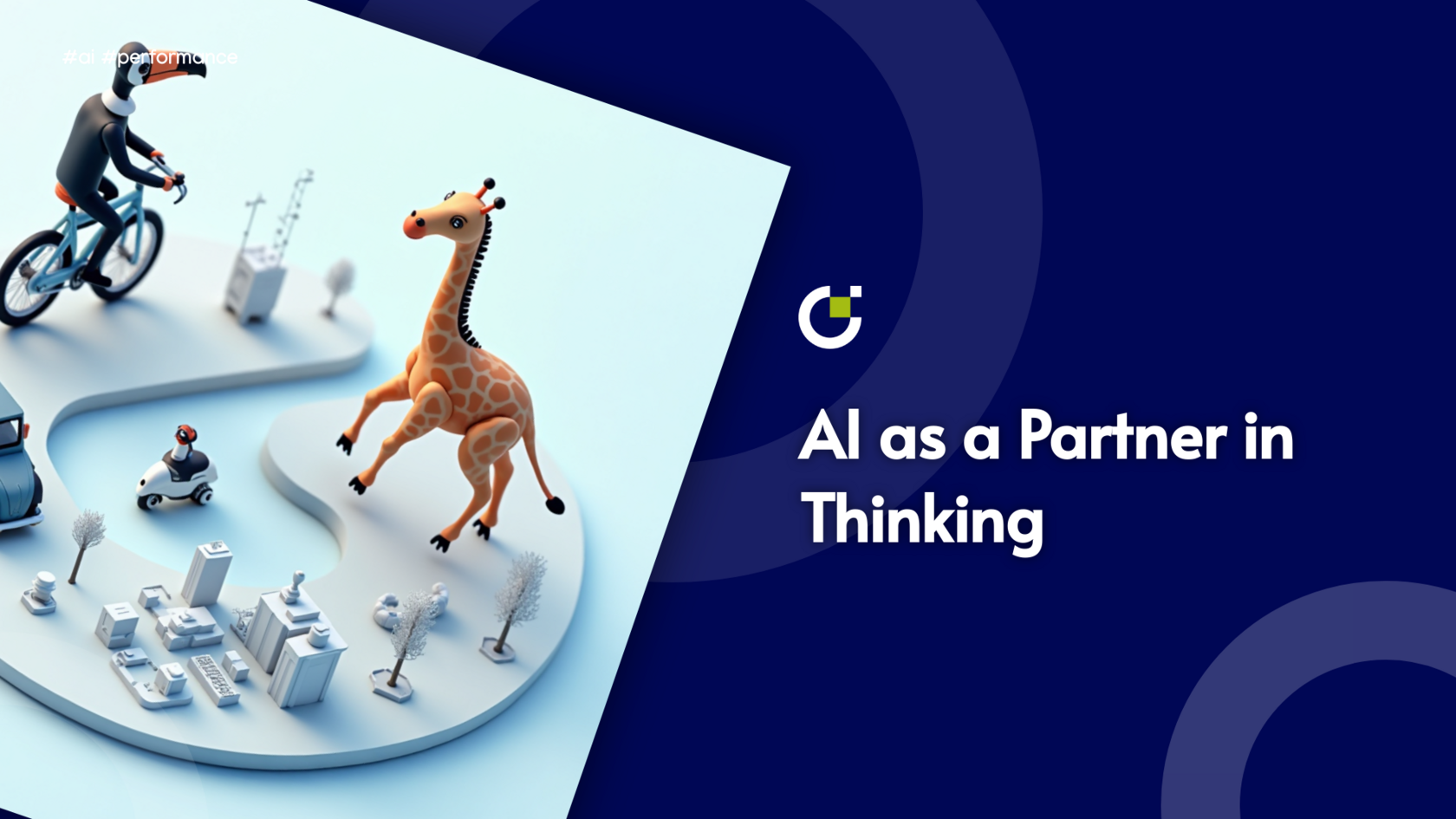
The playful examples are a good place to start. A pelican riding a bicycle is not, on its face, a serious benchmark. Neither is an ostrich on roller skates or a giraffe driving a tiny car. But if you spend enough time building systems around generative models, you learn to pay attention to these so-called silly tasks. They are often compressed tests of coordination. To animate a strange creature in motion with believable fluidity, the model has to hold shape, timing, style, and internal consistency together at once. It needs to translate language into geometry, geometry into motion, and motion into something that still feels intentional.
That is why SVG generation is more than a novelty. It is one of the clearest windows into structured multimodal reasoning. Good SVG output is not just aesthetically pleasing. It is inspectable. You can look at the result and see whether the model understands layering, composition, proportion, and movement. With Gemini 3.1 Pro, the sense is that these outputs have become less brittle and more coherent. We are seeing fewer signs of the model merely approximating visual logic and more signs that it can sustain it.
This shift also hints at something bigger. For a while, the AI conversation separated “creative” models from “serious” ones, as if visual generation and advanced reasoning lived in different worlds. That distinction is starting to feel less useful. The same model that can generate a playful animated scene can also score 77.1% on ARC AGI 2, more than doubling the previous version, and reach 94.3% on GPQA Diamond, which is a remarkable result for scientific knowledge. It can hit 80.6% on SWE Bench, tying a top competitor in coding, and approach near-perfect tool use with 99.3 on T2Bench.
What interests us is not the leaderboard race by itself, but what these numbers imply. They suggest a model that is becoming more transferable. Transferability is one of the most important qualities in practical machine learning. It is the difference between a system that can solve a known class of problems and one that can adapt when the task changes shape. In software work, that quality shows up when a model can move from reading code to debugging architecture decisions to generating a test plan to explaining tradeoffs to a non-technical stakeholder. In design work, it shows up when a model can move from describing a concept to representing it visually to encoding it in a usable format.
That is why the mention of urban planning simulations and 3D printing feels more substantial than another benchmark win. Both are examples of AI stepping into workflows where abstractions have to meet constraints.
Urban planning is not just design. It is design under geography, density, transport logic, zoning realities, human movement, and long-term systems thinking. A model that can help simulate how cities grow around landscapes is doing something more than generating polished diagrams. It is participating in a synthesis problem. It has to reason about space, tradeoffs, and consequences. If those capabilities continue to improve, we may see AI become genuinely useful in early-stage planning environments, where teams are trying to explore possibilities quickly before expensive human effort narrows the field.
The same applies to CAD generation for 3D printing. Turning technical drawings into machine-usable design code requires precision. It is one thing to produce an image that looks plausible. It is another to produce geometry that can actually be manufactured. That distinction, between appearance and utility, is one of the most important fault lines in AI today. Much of the hype in this field comes from systems that are persuasive on the surface. The more valuable progress comes when models start producing outputs that survive contact with real tools, real tolerances, and real constraints.
In that sense, Gemini 3.1 Pro appears to be part of a broader shift from expressive generation to operational generation. The model is not just making things that look right. It is increasingly making things that can be used.
There is another detail worth noting. Some of the most impressive performance figures are described without tools, including 51.4% on Humanity’s Last Exam and strong results in coding and science. That is significant. Tool use is essential, and any serious production system will combine models with retrieval, execution layers, validation systems, and external memory. But raw capability still matters. A model with a strong internal reasoning prior behaves differently from one that relies heavily on scaffolding. It tends to adapt more gracefully, hallucinate less under pressure, and make better use of tools when they are available.
This matters especially for teams designing systems in uncertain environments. In real applications, problem statements are often incomplete. Requirements change halfway through a task. Data arrives in uneven formats. Users ask for things they cannot fully explain. In those moments, what helps is not just tool calling accuracy, though Gemini 3.1 Pro seems exceptionally strong there too. What helps is a model that can infer structure from ambiguity and continue reasoning without being spoon-fed every intermediate step.
That may be part of why these newer models feel qualitatively different in daily use. Benchmark gains are easy to dismiss as abstract. But at a certain point, enough of those gains accumulate that they become visible in product work. The model needs fewer corrective prompts. It carries context more consistently. It makes more plausible first attempts. It notices edge cases. It generalizes better from imperfect examples. None of these changes are glamorous on their own, but together they alter the economics of applying AI.
There is, of course, the question of cost. Gemini 3.1 Pro is not cheap, and that cannot be treated as a footnote. Cost determines where intelligence can be applied and how deeply it can be embedded into a workflow. A very capable model may still be the wrong choice if the task is high volume, latency sensitive, or only loosely consequential. We think this is where some of the industry conversation still needs maturity. The goal is not always to use the most advanced model available. The goal is to use the right level of intelligence for the right decision.
But expensive models often create a strange second-order effect. Even when they are not suitable for mass deployment, they expand the frontier of what feels possible. They become design instruments. Teams use them to prototype workflows, validate assumptions, and discover what kinds of cognition are now within reach. Over time, those patterns cascade downward. What is premium today tends to become standard tomorrow. In that sense, frontier models do not just solve immediate problems. They help define the next generation of ordinary software.
For us, that is the deeper significance of releases like this one. They are not just product updates from a model lab. They are glimpses of a changing interface between language, structure, and action.
A model that can animate a pelican on a bicycle with convincing motion may also be a model that is learning something more general about representation. A model that scores highly in science and coding without tools may be a model that is becoming less dependent on narrow prompting tricks and more capable of genuine abstraction. A model that can assist with urban planning or generate CAD code may be a model that is beginning to bridge the gap between symbolic reasoning and the physical world.
We are still early in this transition, and caution remains healthy. Benchmarks are informative but incomplete. Demos are polished by design. Generalization in the lab is not the same as reliability in production. None of this progress removes the need for verification, human review, and system-level design. If anything, stronger models make those disciplines more important, because the outputs become more persuasive and the stakes get higher.
Still, it is hard not to notice the direction of travel. The most important gains in AI no longer seem confined to one narrow lane. They are appearing in reasoning, coding, design, scientific recall, visual structure, and tool orchestration all at once. That convergence is what makes a release like Gemini 3.1 Pro worth paying attention to.
Not because it wins another round of benchmark comparisons.
But because it suggests that machine intelligence is becoming more compositional, more usable, and a little closer to the messy shape of real work.
Every new frontier model arrives with a familiar set of claims: better reasoning, stronger coding, broader world knowledge, more reliable tool use. At this point, those announcements are expected. What feels more interesting with Gemini 3.1 Pro is that the improvements seem to show up across very different kinds of work, from fluid SVG animation to scientific problem solving to CAD generation. That matters because the real story in applied AI is rarely about one isolated capability. It is about whether a model can move between forms of intelligence without losing its footing.
The playful examples are a good place to start. A pelican riding a bicycle is not, on its face, a serious benchmark. Neither is an ostrich on roller skates or a giraffe driving a tiny car. But if you spend enough time building systems around generative models, you learn to pay attention to these so-called silly tasks. They are often compressed tests of coordination. To animate a strange creature in motion with believable fluidity, the model has to hold shape, timing, style, and internal consistency together at once. It needs to translate language into geometry, geometry into motion, and motion into something that still feels intentional.
That is why SVG generation is more than a novelty. It is one of the clearest windows into structured multimodal reasoning. Good SVG output is not just aesthetically pleasing. It is inspectable. You can look at the result and see whether the model understands layering, composition, proportion, and movement. With Gemini 3.1 Pro, the sense is that these outputs have become less brittle and more coherent. We are seeing fewer signs of the model merely approximating visual logic and more signs that it can sustain it.
This shift also hints at something bigger. For a while, the AI conversation separated “creative” models from “serious” ones, as if visual generation and advanced reasoning lived in different worlds. That distinction is starting to feel less useful. The same model that can generate a playful animated scene can also score 77.1% on ARC AGI 2, more than doubling the previous version, and reach 94.3% on GPQA Diamond, which is a remarkable result for scientific knowledge. It can hit 80.6% on SWE Bench, tying a top competitor in coding, and approach near-perfect tool use with 99.3 on T2Bench.
What interests us is not the leaderboard race by itself, but what these numbers imply. They suggest a model that is becoming more transferable. Transferability is one of the most important qualities in practical machine learning. It is the difference between a system that can solve a known class of problems and one that can adapt when the task changes shape. In software work, that quality shows up when a model can move from reading code to debugging architecture decisions to generating a test plan to explaining tradeoffs to a non-technical stakeholder. In design work, it shows up when a model can move from describing a concept to representing it visually to encoding it in a usable format.
That is why the mention of urban planning simulations and 3D printing feels more substantial than another benchmark win. Both are examples of AI stepping into workflows where abstractions have to meet constraints.
Urban planning is not just design. It is design under geography, density, transport logic, zoning realities, human movement, and long-term systems thinking. A model that can help simulate how cities grow around landscapes is doing something more than generating polished diagrams. It is participating in a synthesis problem. It has to reason about space, tradeoffs, and consequences. If those capabilities continue to improve, we may see AI become genuinely useful in early-stage planning environments, where teams are trying to explore possibilities quickly before expensive human effort narrows the field.
The same applies to CAD generation for 3D printing. Turning technical drawings into machine-usable design code requires precision. It is one thing to produce an image that looks plausible. It is another to produce geometry that can actually be manufactured. That distinction, between appearance and utility, is one of the most important fault lines in AI today. Much of the hype in this field comes from systems that are persuasive on the surface. The more valuable progress comes when models start producing outputs that survive contact with real tools, real tolerances, and real constraints.
In that sense, Gemini 3.1 Pro appears to be part of a broader shift from expressive generation to operational generation. The model is not just making things that look right. It is increasingly making things that can be used.
There is another detail worth noting. Some of the most impressive performance figures are described without tools, including 51.4% on Humanity’s Last Exam and strong results in coding and science. That is significant. Tool use is essential, and any serious production system will combine models with retrieval, execution layers, validation systems, and external memory. But raw capability still matters. A model with a strong internal reasoning prior behaves differently from one that relies heavily on scaffolding. It tends to adapt more gracefully, hallucinate less under pressure, and make better use of tools when they are available.
This matters especially for teams designing systems in uncertain environments. In real applications, problem statements are often incomplete. Requirements change halfway through a task. Data arrives in uneven formats. Users ask for things they cannot fully explain. In those moments, what helps is not just tool calling accuracy, though Gemini 3.1 Pro seems exceptionally strong there too. What helps is a model that can infer structure from ambiguity and continue reasoning without being spoon-fed every intermediate step.
That may be part of why these newer models feel qualitatively different in daily use. Benchmark gains are easy to dismiss as abstract. But at a certain point, enough of those gains accumulate that they become visible in product work. The model needs fewer corrective prompts. It carries context more consistently. It makes more plausible first attempts. It notices edge cases. It generalizes better from imperfect examples. None of these changes are glamorous on their own, but together they alter the economics of applying AI.
There is, of course, the question of cost. Gemini 3.1 Pro is not cheap, and that cannot be treated as a footnote. Cost determines where intelligence can be applied and how deeply it can be embedded into a workflow. A very capable model may still be the wrong choice if the task is high volume, latency sensitive, or only loosely consequential. We think this is where some of the industry conversation still needs maturity. The goal is not always to use the most advanced model available. The goal is to use the right level of intelligence for the right decision.
But expensive models often create a strange second-order effect. Even when they are not suitable for mass deployment, they expand the frontier of what feels possible. They become design instruments. Teams use them to prototype workflows, validate assumptions, and discover what kinds of cognition are now within reach. Over time, those patterns cascade downward. What is premium today tends to become standard tomorrow. In that sense, frontier models do not just solve immediate problems. They help define the next generation of ordinary software.
For us, that is the deeper significance of releases like this one. They are not just product updates from a model lab. They are glimpses of a changing interface between language, structure, and action.
A model that can animate a pelican on a bicycle with convincing motion may also be a model that is learning something more general about representation. A model that scores highly in science and coding without tools may be a model that is becoming less dependent on narrow prompting tricks and more capable of genuine abstraction. A model that can assist with urban planning or generate CAD code may be a model that is beginning to bridge the gap between symbolic reasoning and the physical world.
We are still early in this transition, and caution remains healthy. Benchmarks are informative but incomplete. Demos are polished by design. Generalization in the lab is not the same as reliability in production. None of this progress removes the need for verification, human review, and system-level design. If anything, stronger models make those disciplines more important, because the outputs become more persuasive and the stakes get higher.
Still, it is hard not to notice the direction of travel. The most important gains in AI no longer seem confined to one narrow lane. They are appearing in reasoning, coding, design, scientific recall, visual structure, and tool orchestration all at once. That convergence is what makes a release like Gemini 3.1 Pro worth paying attention to.
Not because it wins another round of benchmark comparisons.
But because it suggests that machine intelligence is becoming more compositional, more usable, and a little closer to the messy shape of real work.