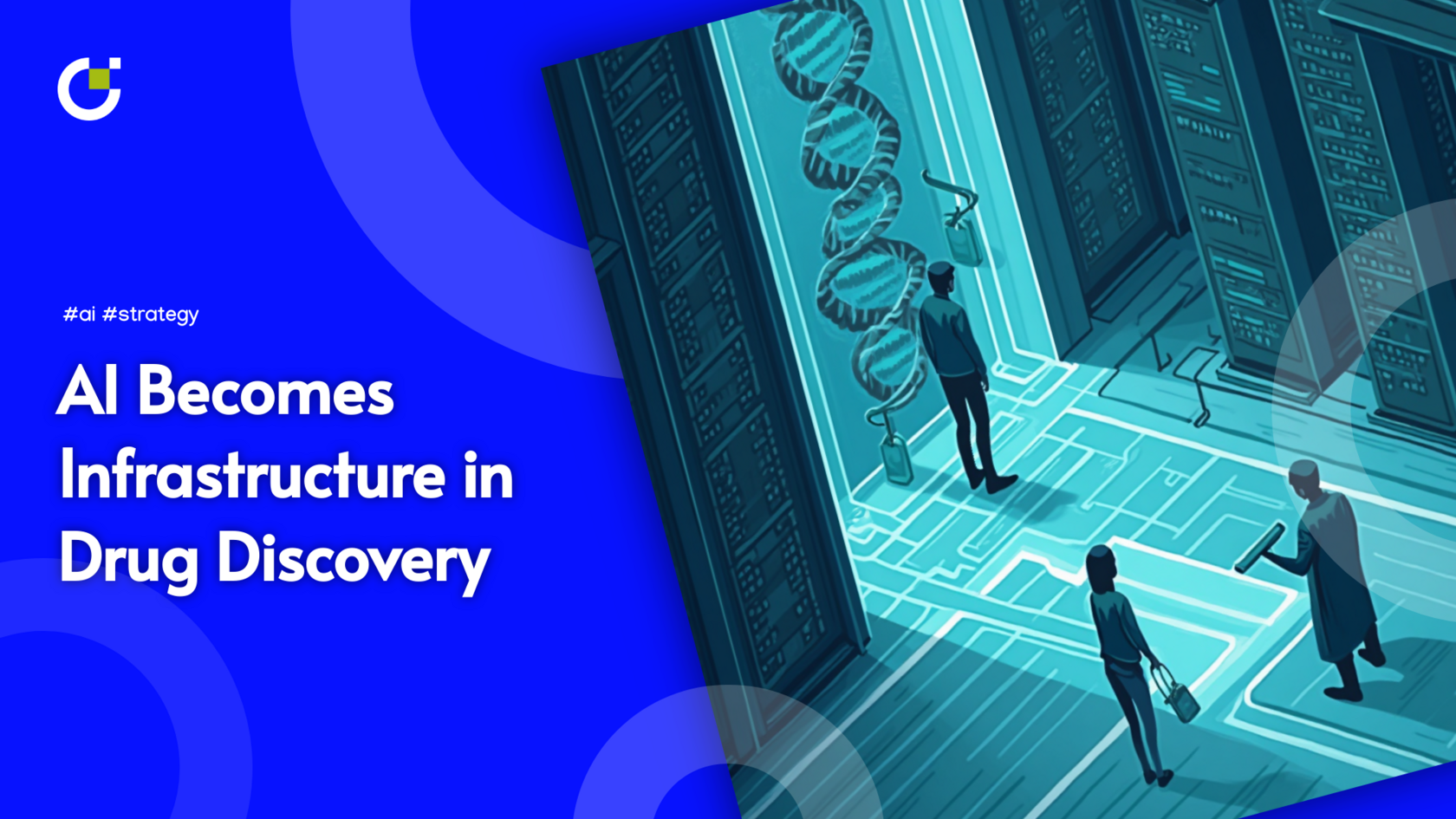
At Dellecod, we've had a lot of internal conversations about the evolving relationship between AI labs and real-world industries. One of the more thought-provoking recent developments is the idea that OpenAI might begin exchanging compute power — the raw capability of AI models like ChatGPT — for a stake in intellectual property, particularly in biotech and pharmaceutical research. It’s a concept with some history, but still very much in uncharted waters.
Sarah Friar, OpenAI’s CFO, mentioned this possibility during a panel at Davos. Notably, she framed it in the context of advanced drug discovery — not everyday user data or general IP from casual ChatGPT interactions, which would understandably raise a very different kind of alarm. In the highly specialized world of medical R&D, though, the idea of value-sharing models is well worn. Stanford, for example, lays claim to inventions developed with more than incidental use of its resources, and companies like GSK have previously partnered with firms like 23andMe to co-develop patented drugs using shared data.
So while the headlines ignited, the actual proposal seems more nuanced.
It’s also in line with what we’re starting to see across the AI landscape. Compute has become a new kind of currency. Training the latest models requires infrastructure that is astonishingly expensive, both financially and in terms of energy. What OpenAI and others are proposing — think DeepMind, Anthropic, Isomorphic Labs — is to treat that compute as a form of strategic capital. In return for access, companies conducting life sciences research might give up some equity-like share of future upside: patent rights, royalty streams, licensing deals.
From a resource-allocation standpoint, that makes a lot of sense. AI can drastically accelerate processes like protein folding prediction or virtual compound screening. But it’s not just about speed. AI agents can bring pattern recognition to spaces that are functionally unsearchable by humans. Applying that kind of power without upfront funding could unlock huge potential — especially for companies that aren’t flush with VC money but have deep domain expertise.
There’s a flip side, though.
The more compute becomes a gatekeeper for innovation, the easier it is to imagine a world where a small number of AI firms hold the keys to major sectors of the economy. If using GPT-6 for research means handing over part of your IP, what happens when GPT-10 is five times more capable? What does competition look like in an ecosystem where access to progress is conditional?
It’s not hard to draw analogies to venture capital, where equity-for-cash deals have long compressed innovation inside influence networks. But compute-for-IP adds a newer, less regulated wrinkle. Who sets the terms? Who enforces compliance? And how do we make sure that discoveries essential to public health — vaccines, antibiotics, treatments for neglected diseases — don’t disappear into private vaults?
These questions matter even more as we inch closer to AGI. If we believe that general-purpose artificial intelligence could impact most domains of work and knowledge, distributing its benefits equitably becomes a much bigger concern. Concentrated ownership of compute might become the modern analog of land or labor in previous industrial revolutions: whoever owns it, owns the future.
Still, it’s important not to romanticize the alternatives. Science has always required resources: labs, grants, expensive equipment. Federally funded research has long operated under IP-sharing rules. Universities and corporations already maintain technology transfer offices to commercialize findings born of shared infrastructure. What’s new here is not the idea of cost-sharing — it’s the form that cost takes, and the kind of leverage that gives AI companies.
OpenAI’s reported 2025 revenue target — $20 billion — speaks to just how big these markets are. But much like biology itself, the challenge is ensuring that growth and complexity don’t overwhelm the principle of access. There’s a huge opportunity to use AI as an equalizer, leveling the field for small labs and startups that otherwise couldn't afford to experiment at global scale. Whether that happens depends on how we structure the exchanges — compute, data, IP — that will define this new economy.
We’ll be watching closely. These are the choices that will shape not just technologies, but the futures they’re allowed to create.
Sarah Friar, OpenAI’s CFO, mentioned this possibility during a panel at Davos. Notably, she framed it in the context of advanced drug discovery — not everyday user data or general IP from casual ChatGPT interactions, which would understandably raise a very different kind of alarm. In the highly specialized world of medical R&D, though, the idea of value-sharing models is well worn. Stanford, for example, lays claim to inventions developed with more than incidental use of its resources, and companies like GSK have previously partnered with firms like 23andMe to co-develop patented drugs using shared data.
So while the headlines ignited, the actual proposal seems more nuanced.
It’s also in line with what we’re starting to see across the AI landscape. Compute has become a new kind of currency. Training the latest models requires infrastructure that is astonishingly expensive, both financially and in terms of energy. What OpenAI and others are proposing — think DeepMind, Anthropic, Isomorphic Labs — is to treat that compute as a form of strategic capital. In return for access, companies conducting life sciences research might give up some equity-like share of future upside: patent rights, royalty streams, licensing deals.
From a resource-allocation standpoint, that makes a lot of sense. AI can drastically accelerate processes like protein folding prediction or virtual compound screening. But it’s not just about speed. AI agents can bring pattern recognition to spaces that are functionally unsearchable by humans. Applying that kind of power without upfront funding could unlock huge potential — especially for companies that aren’t flush with VC money but have deep domain expertise.
There’s a flip side, though.
The more compute becomes a gatekeeper for innovation, the easier it is to imagine a world where a small number of AI firms hold the keys to major sectors of the economy. If using GPT-6 for research means handing over part of your IP, what happens when GPT-10 is five times more capable? What does competition look like in an ecosystem where access to progress is conditional?
It’s not hard to draw analogies to venture capital, where equity-for-cash deals have long compressed innovation inside influence networks. But compute-for-IP adds a newer, less regulated wrinkle. Who sets the terms? Who enforces compliance? And how do we make sure that discoveries essential to public health — vaccines, antibiotics, treatments for neglected diseases — don’t disappear into private vaults?
These questions matter even more as we inch closer to AGI. If we believe that general-purpose artificial intelligence could impact most domains of work and knowledge, distributing its benefits equitably becomes a much bigger concern. Concentrated ownership of compute might become the modern analog of land or labor in previous industrial revolutions: whoever owns it, owns the future.
Still, it’s important not to romanticize the alternatives. Science has always required resources: labs, grants, expensive equipment. Federally funded research has long operated under IP-sharing rules. Universities and corporations already maintain technology transfer offices to commercialize findings born of shared infrastructure. What’s new here is not the idea of cost-sharing — it’s the form that cost takes, and the kind of leverage that gives AI companies.
OpenAI’s reported 2025 revenue target — $20 billion — speaks to just how big these markets are. But much like biology itself, the challenge is ensuring that growth and complexity don’t overwhelm the principle of access. There’s a huge opportunity to use AI as an equalizer, leveling the field for small labs and startups that otherwise couldn't afford to experiment at global scale. Whether that happens depends on how we structure the exchanges — compute, data, IP — that will define this new economy.
We’ll be watching closely. These are the choices that will shape not just technologies, but the futures they’re allowed to create.